C-PLATFORM × Michelle Lewis-King

THE PULSE PROJECT
Project Description
THE PULSE PROJECT
2011-2017
Unlike the traditional Western medical perspective on the human body, ancient traditional Chinese medicine views the human body not as a purely precise machine, but as an organic living entity[1]. According to TCM theory, the human body possesses five zang organs (six if the pericardium is included), namely the heart, spleen, lungs, kidneys, and liver. The “six fu organs” encompass the energy pathways of the small intestine, large intestine, gallbladder, bladder, stomach, and triple burner. Our five zang organs correspond respectively to the five elements, five tones, five colors, five seasons, and even five emotions. In the TCM perspective, the five zang and six fu organs do not function as isolated organs, but rather as a dynamically balanced system of close collaboration and mutual restraint[2]. Artist Michelle Lewis-King developed a profound interest in this concept.
From 2011 to 2017, Michelle spearheaded an art project titled “The Pulse Project.” This initiative transformed the traditional Chinese medical practice of pulse diagnosis into a contemporary performance medium, turning the tactile act of pulse-taking into an artistic expression. Drawing on years of clinical experience, she developed a method that treats the rhythmic waveforms of the pulse as both a source of medical insight and the foundation for immersive, embodied soundscapes. These performances treat “human touch” as a core technology: a medium capable not only of generating diagnostic information but also of enabling the body to form artistic resonant interpretations. Through the shaping of sound, they seek to heal the shared body of the individual and the audience.
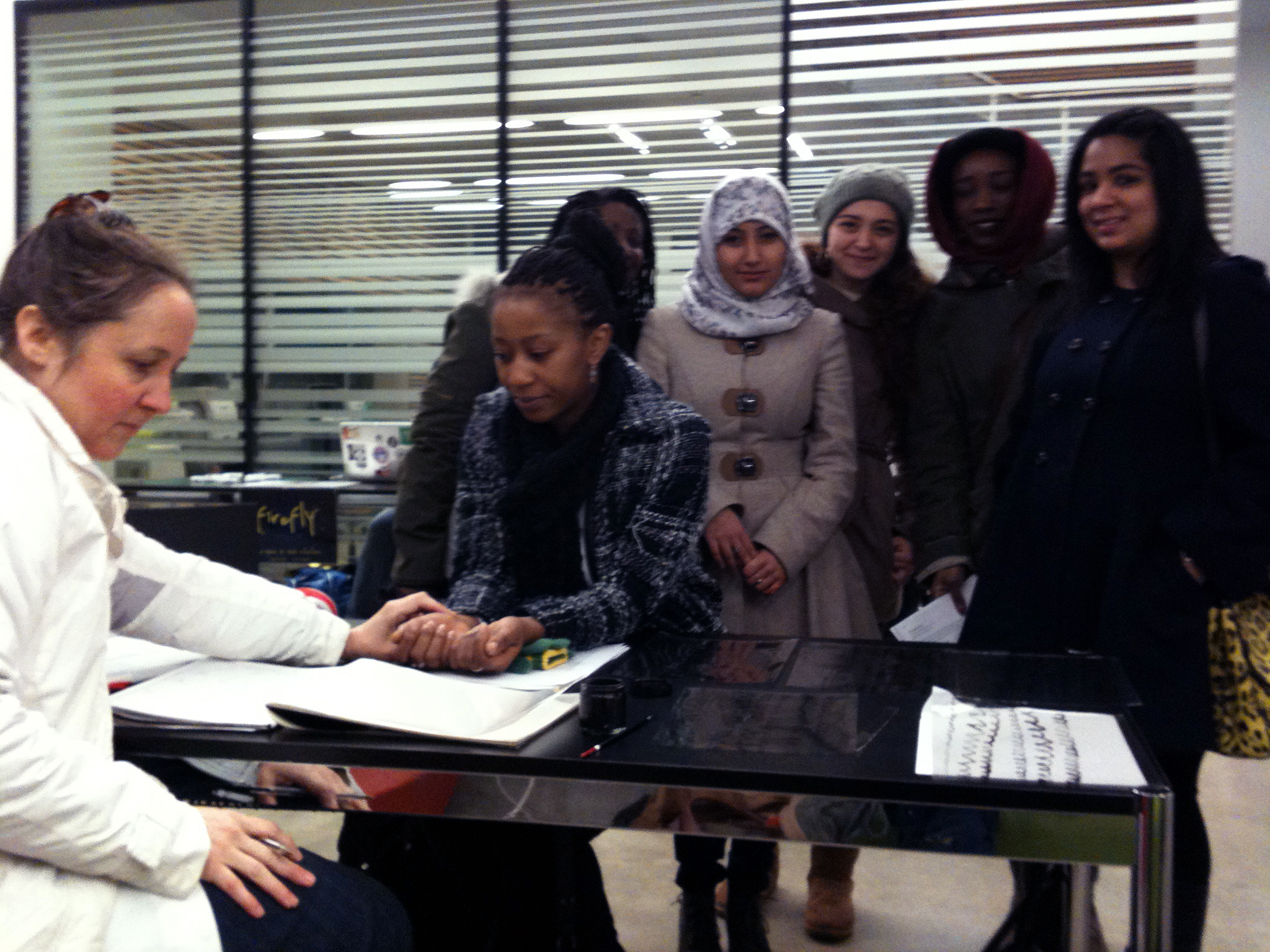
Pulse Project Performance at the Victoria &Albert Museum, 2013 (© Michelle Lewis-King. Photo: Nick Fudge).
Based on traditional Chinese pulse diagnosis theory, Michelle analyzes each participant’s pulse pattern during the performance. With their consent, she takes their pulse, identifying physiological characteristics and patterns through the 28 pulse patterns of traditional Chinese medicine—such as the “string-like pulse” resembling a taut musical string or the “rough pulse” with irregular flow—while recording pulse characteristics like speed and strength. By analyzing these unique rhythmic waveforms sensed within people’s bodies, Michelle transformed them into customized musical scores (hand-drawn or painted).
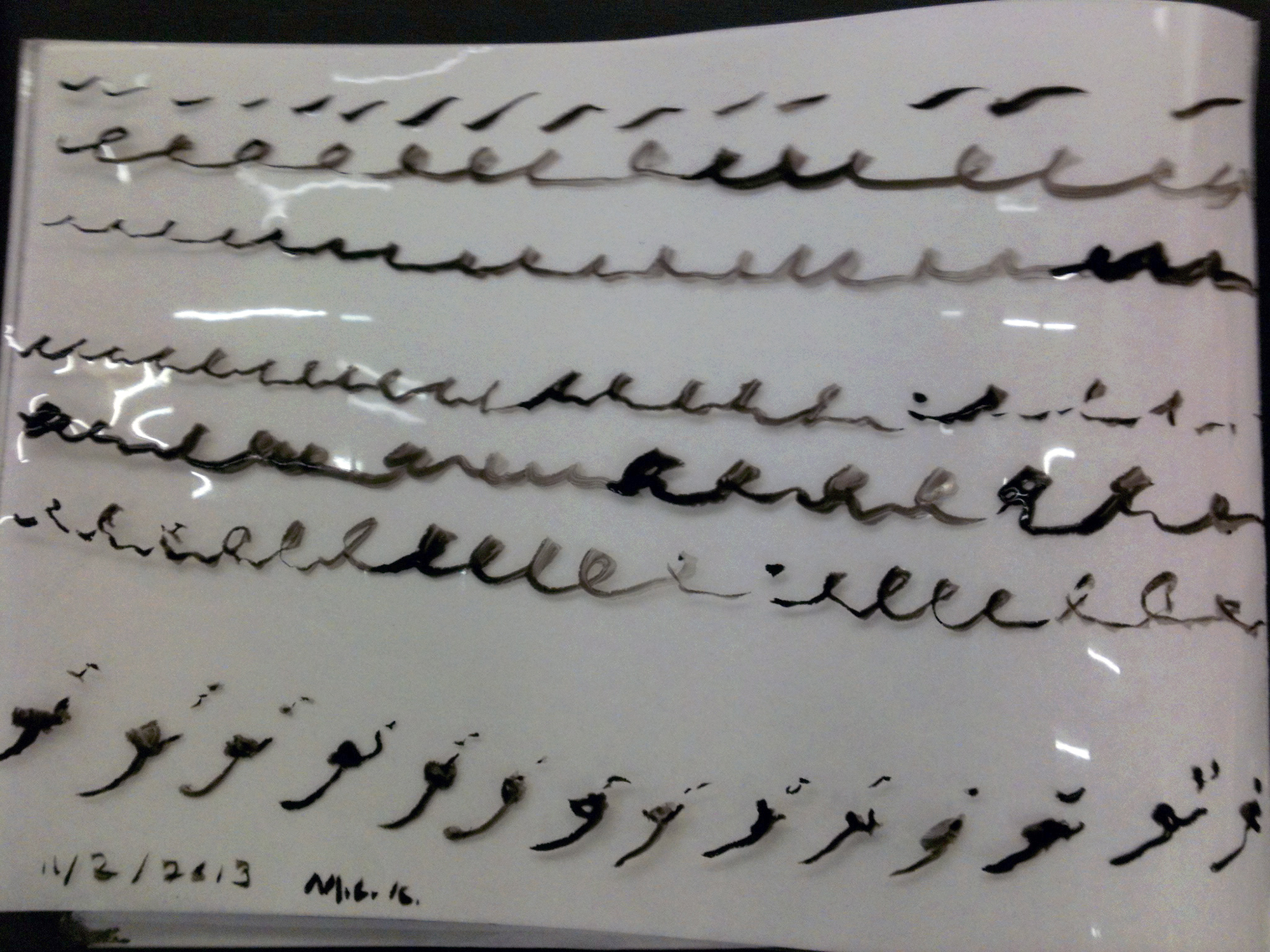
Pulse Project: Cambridge Notation 1, 2014. [Ink Painting on Acetate (© Michelle Lewis-King. Photo: Léna Lewis-King). Dimensions: 18 x 30 cm.
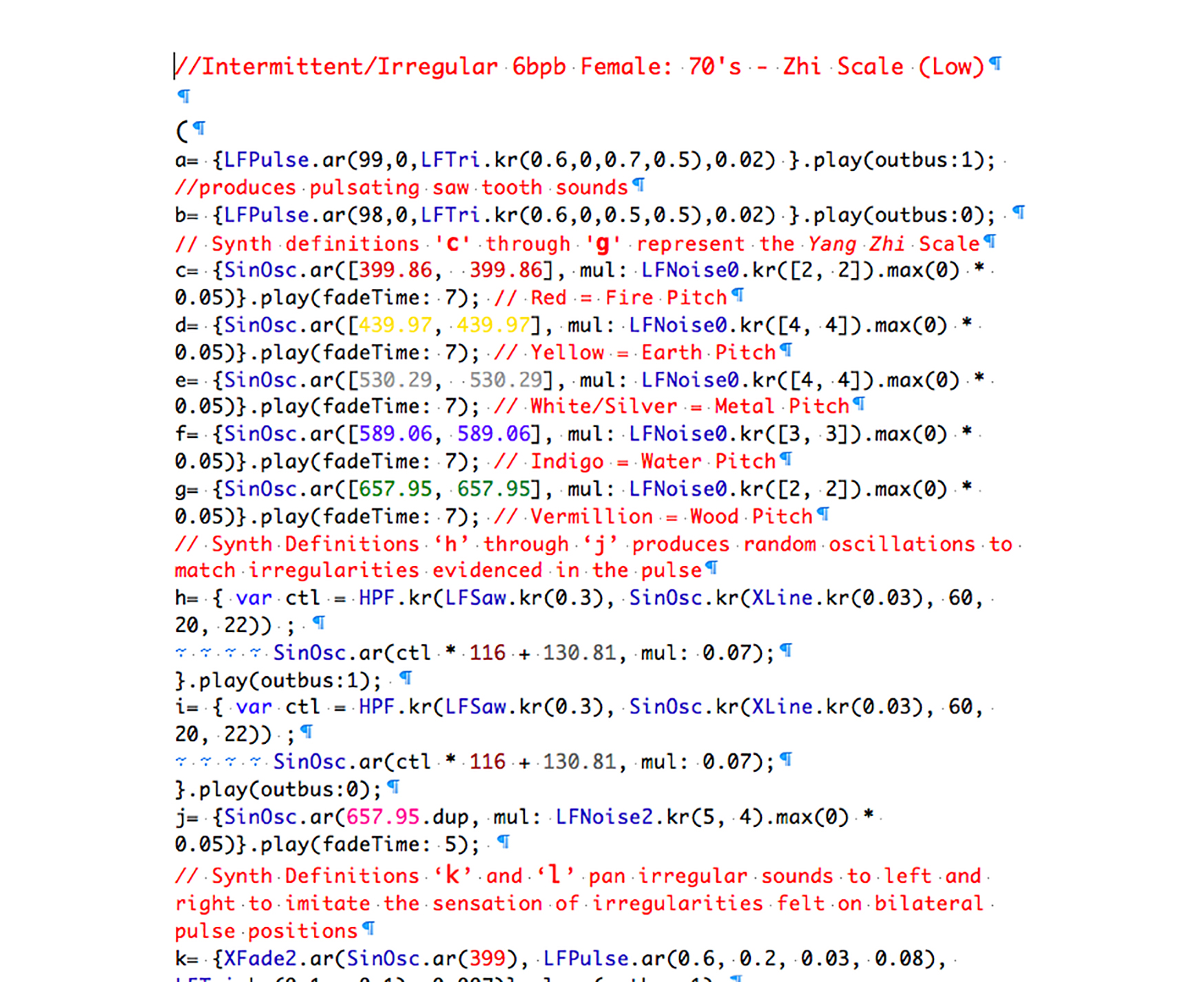
V&A_1 SC Combination Code Example (2013) © Michelle Lewis-King
This exclusive musical score combines with the Chinese pentatonic scale to create a live performance of a digital “pulse” soundscape. Using programming software, Michel transforms participants’ pulse characteristics into electronic sounds. The pitch of these sounds is based on the traditional Chinese pentatonic scale—Gong, Shang, Jue, Zhi, and Yu—while simultaneously adjusting the sound’s pitch, intensity, and timbre according to the participant’s pulse characteristics. This process generates a unique “pulse music” for each individual, creating a soundscape that mirrors the body’s internal rhythms and medical “state”. In 2013, The Pulse Project was performed at London’s Victoria and Albert Museum, transforming the museum space into a field for relational exploration. Participants’ pulses became the foundation of the sound environment, enabling audiences to interact and communicate within the museum space through this medium.
Gong (宫)-Central Saints Martins ©Michelle Lewis-King
Shang (商)-Hastings ©Michelle Lewis-King
Jue (角)- Copenhagen ©Michelle Lewis-King
Zhi (徵)- WhiteBldg ©Michelle Lewis-King
Yu (羽)- Copenhagen ©Michelle Lewis-King
Gong Shang (宫商)- WhiteBldg ©Michelle Lewis-King
Jue (角)- WhiteBldg ©Michelle Lewis-King
Zhi Yu (徵羽) – Anatomy Museum ©Michelle Lewis-King
Yu Zhi (羽徵)- Anatomy Museum ©Michelle Lewis-King
The Pulse Project draws upon specific early Chinese medical philosophies and musical theories, reimagining the human individual as a microcosm—a conscious entity where matter and energy interact and resonate. Each soundscape embodies both shared rhythmic patterns and unique rhythms, reflecting the universal heartbeat, life essence, and energy inherent in all living beings. Every individual interprets life in a distinct manner, releasing their own musical imprint through their pulse.
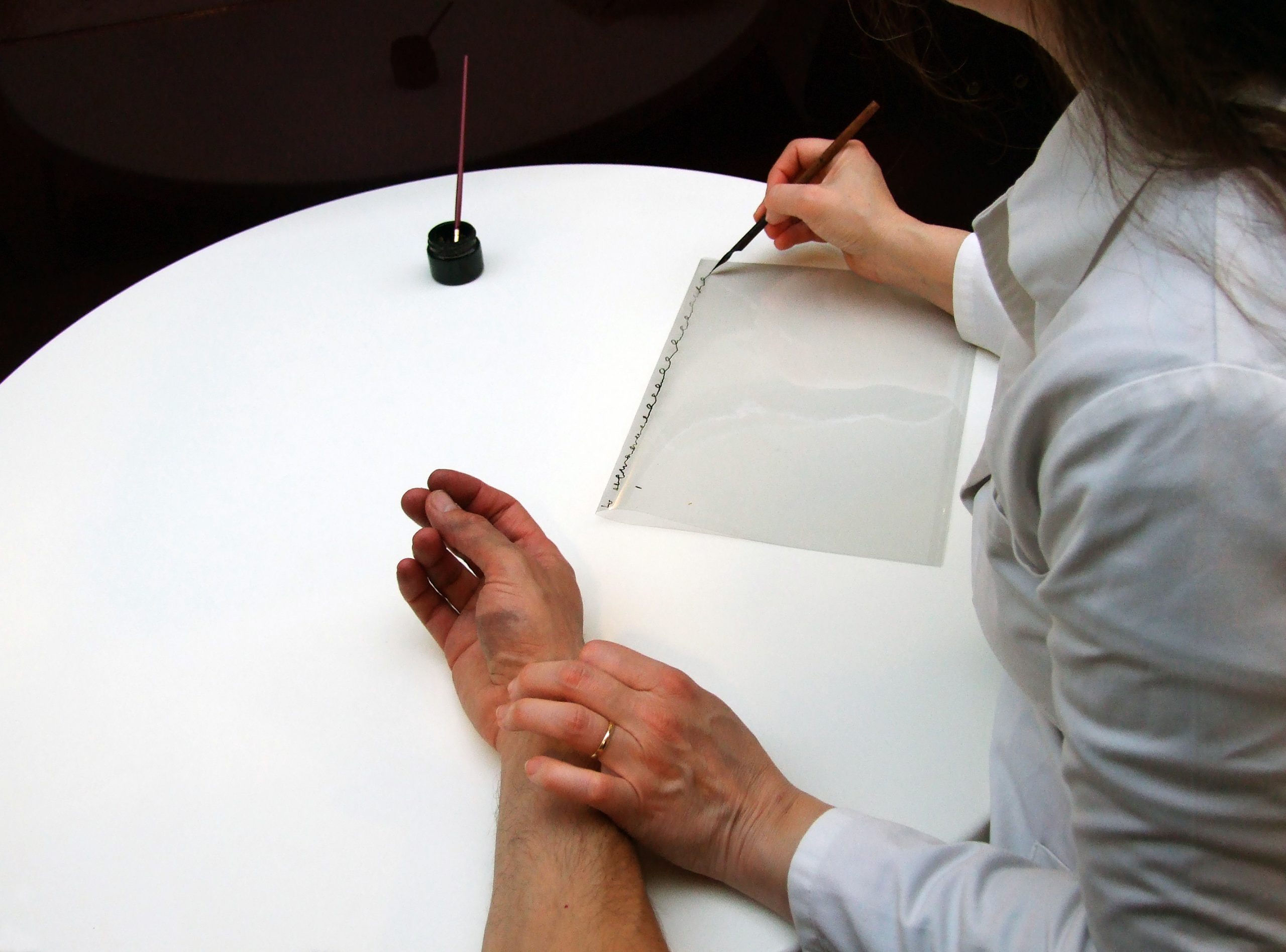
© Michelle Lewis-King
PULSE PROJECT at 4DSOUND
2015-2017
Michelle collaborated with the 4DSOUND spatial acoustics studio[3], launching the 4DSOUND Pulse Project. Initially commissioned by the TodaysArt 2015[4] international immersive arts festival in The Hague, it was further developed during the 48-hour event “Reflections from the Inner Mirror”[5] hosted by the Spatial Sound Institute in Budapest. At its core lies the translation of Chinese medicine’s Five Elements theory—along with the operational principles of internal organs and meridians, and pulse characteristics—into controllable, perceptible spatial audio. This transforms sound into a “Somatic Sculpture” within the 4DSOUND environment, exploring the potential of “sound medicine.”
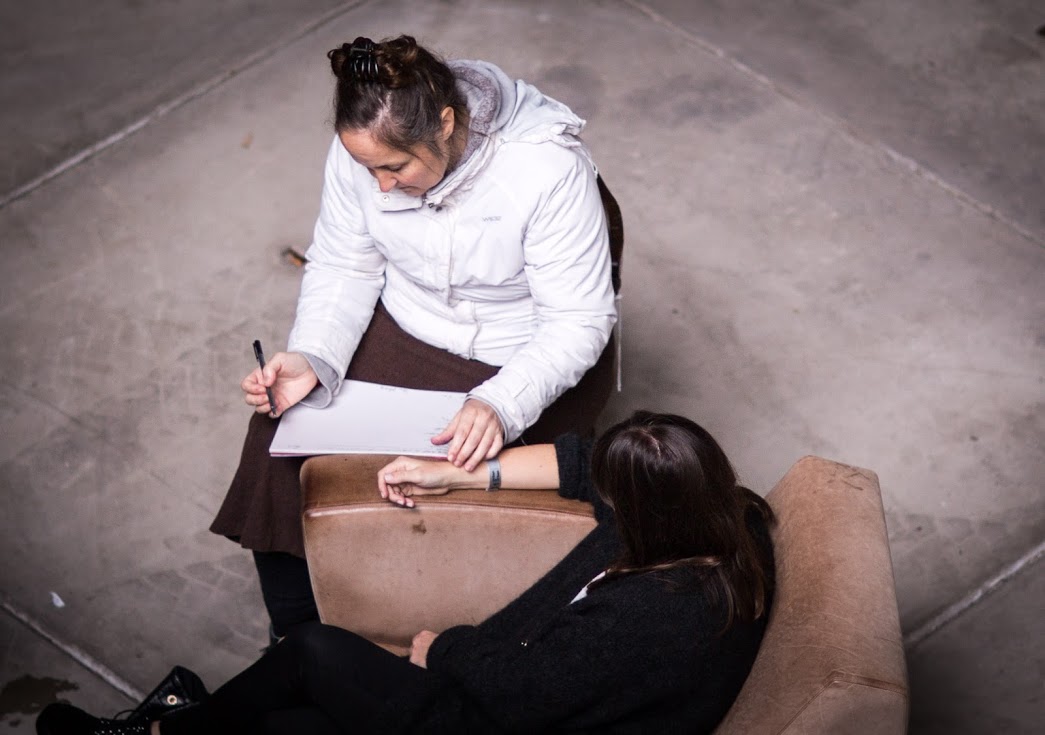
Reading a participant’s pulse prior to performing the spatial soundscape ©Michelle Lewis-King/ 4DSOUND
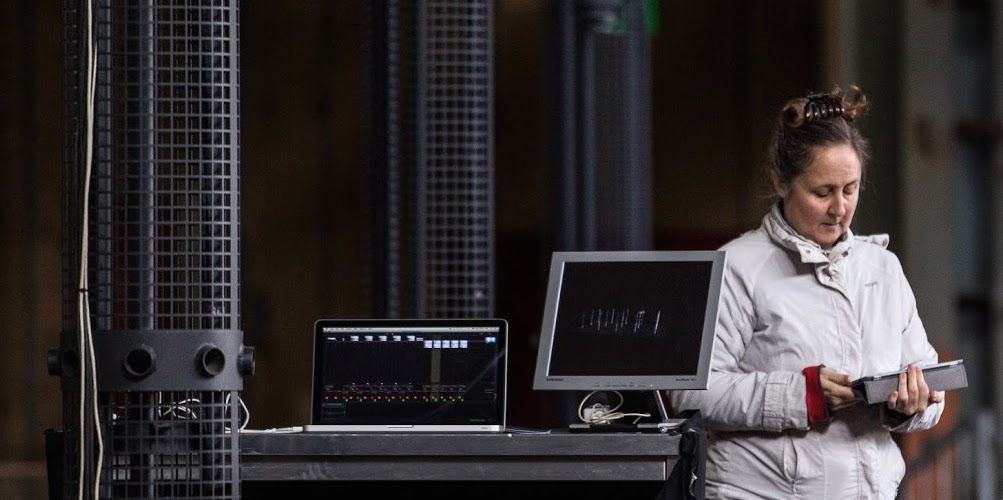
Pulse Project at 4DSOUND – TodaysArt 2015 ©Michelle Lewis-King/ 4DSOUND
The “Five Element Interface” in the 4DSOUND Pulse Project is a graphical user interface custom-developed for iPad, comprising five pages, each corresponding to a set of paired organs. Each page contains four macro controllers, each linked to a compact set of 4DSOUND (stereo sound) parameters (e.g., spatial trajectory, diffusion/reverb, spatial delay, real-time path looping). These parameters are preset to embody the behavioral characteristics of the corresponding organ-Five Elements pairing. For example: Lung-Large Intestine = Metal: Bright, sharp Kidney-Bladder = Water: Deeply submerged, permeating and profound.
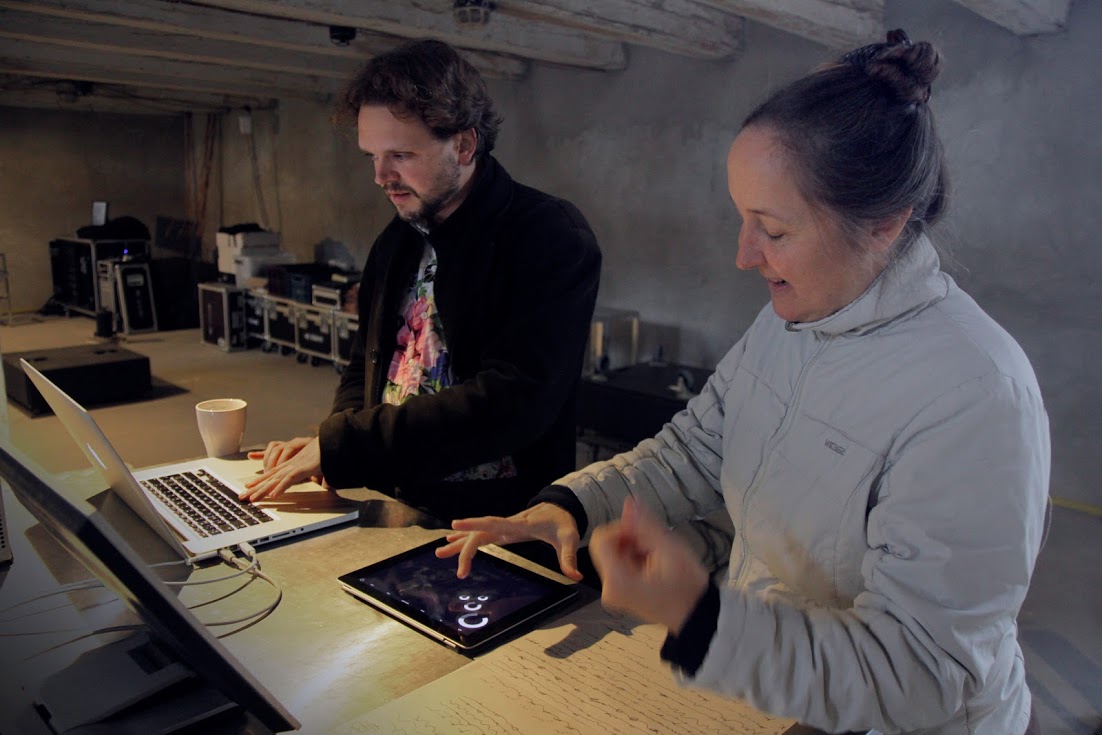
Pulse Project at 4DSOUND (2015) [digital image] 4DSOUND residency, Budapest, Hungary © 4DSOUND/ Michelle Lewis-King. Photo: Fanni Fasakas.
- Deficiency/Strong (虚/实) → amplitude & density (gain, polyphony).
- Floating/Deep (浮/沉) → placement within the 4D architecture & early/late reflections (z-axis, etc.).
- Slow/Rapid (迟/数) → pulse rates mirror LFO [7] rates / rhythmic subdivision.
At the same time, frequencies are paired with spatial movements, allowing sound to travel in alignment with the organ systems, for example:
- Spleen–Stomach 脾 – 胃 (Earth, 宫): 264 Hz / 523 Hz as the pitch centre; a smooth, rolling texture that circulates around the room’s centre (a gently orbiting movement with soft acceleration that sounds like a “pearl-in-a-bowl”).
- Lung–Large Intestine 肺 – 大肠 (Metal, 商): 295 Hz / 587 Hz with a mild saw tooth brightness; a breath-loop path that travels from outside → centre → outside, expanding/contracting in sync with tempo.
- Heart–Small Intestine 心 – 小肠 (Fire, 徵): 399 Hz / 785 Hz as the pitch centre;Quicksilver, flickering brightness rising vertically to the ceiling and spreading outwards with irregular, radiant pulses — animated and unstable, just like firelight.
Each “organ-element” pair is not merely a sonic symbol but is expressed through spatialized sound behaviors. Mitchell worked alongside Paul Oomen and the 4DSOUND team, continuously refining and iterating until every “sonic organ network” could be perceived as a resonant analogy to pulse diagnosis within the spatial audio field.
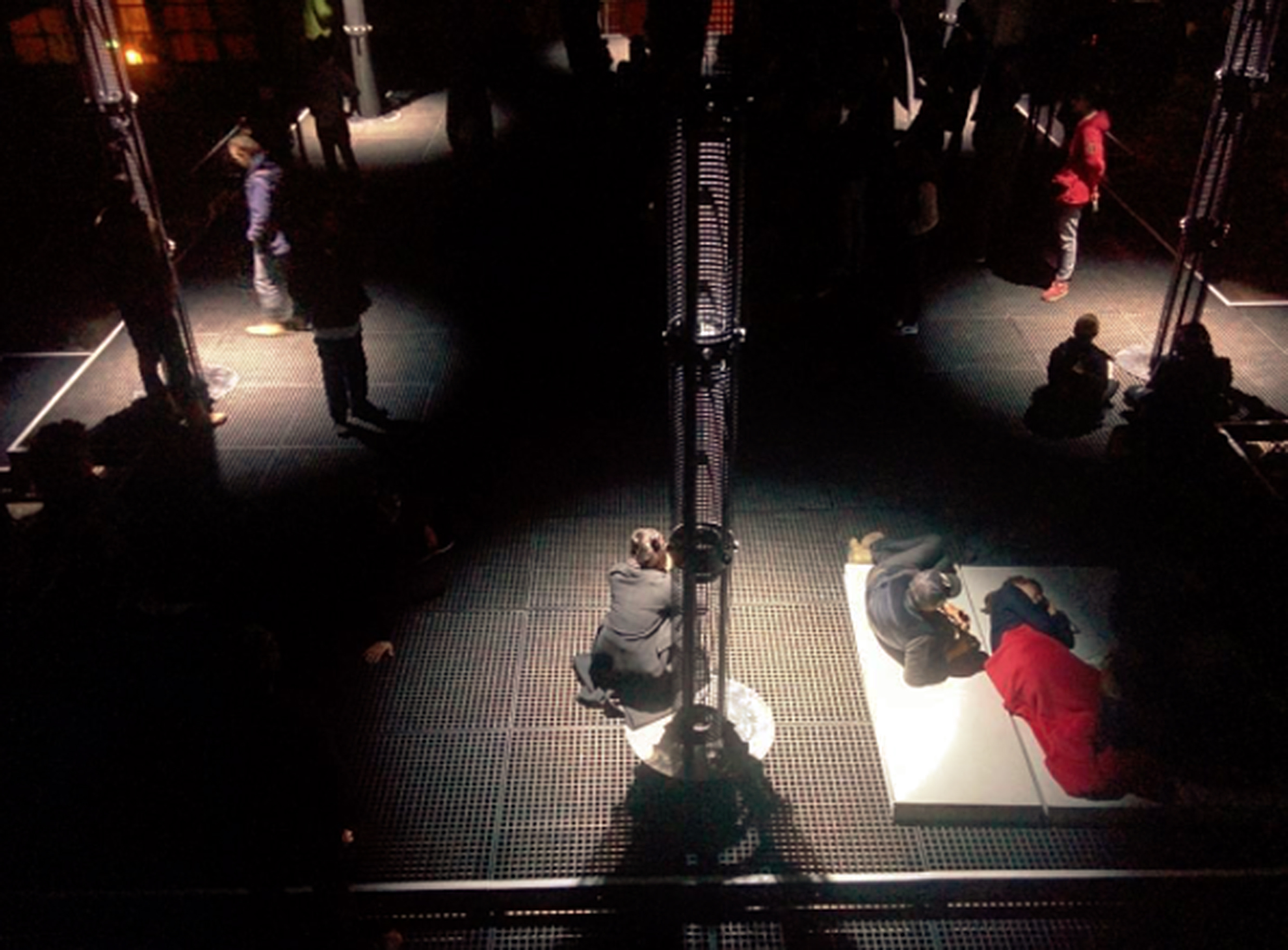
Audience detail of immersive Pulse Project soundscape public performance using the 4DSOUND spatial sound system. Pulse Sound Sculpture 14. TodaysArt NL 2015, Circadian: 4DSOUND. ©Michelle Lewis-King/4DSOUND. Photo: Florence To.
The 4DSOUND environment consists of twelve modular columns within a 20m × 12m × 5m space, each housing sixty-four omnidirectional speakers, nine subwoofers, and a black grid floor. In this architecture, sound is no longer a linear projection but a sculptural medium: enveloping, flowing, breathing. The “Five Elements Interface” enables the creation of “sound bodies” that synchronize with each participant’s pulse, translating diagnostic symbols into spatialized vibrational patterns.
Official 4DSOUND animation 4DAnimator. © Michelle Lewis-King/4DSOUND
The audience described intense bodily sensations: some felt vibrations near their spleen, others experienced pressure in their chest, while some resonated at the bladder. Each performance became a unique experiment in acoustic intimacy—a choreography of vibrating human presence, elemental rhythms, and infrasonic touch. This convergence of embodied knowledge and spatial audio created performances where sound took physical form, not just heard but viscerally felt, showcasing a new paradigm of “sonic medicine.”
The Pulse Project offers an embodied poetics of spatial sound. Rooted in the ancient Chinese tradition of pulse diagnosis, it is mediated through contemporary audio technology, transforming pulse patterns into modes and frequencies into tangible presence. It proposes not just an aesthetic experience but also a speculative approach to healing: a way to “listen” to oneself from within the body, translating this listening into a shared sonic environment.
The 4DSOUND Pulse Project integrates art, medicine, philosophy, and technology to establish a novel “rhythm analysis” methodology. It explores the subtle yet profound connections between the body, consciousness, and interpersonal relationships, offering a creative pathway for understanding ecological existence and interdisciplinary knowledge production.
Related Information
Michelle Lewis-King holds a Ph.D. in Art, Science, and Technology, a Master of Fine Arts and Bachelor of Fine Arts in Sculpture, and a Bachelor of Science in Traditional Chinese Medicine. Currently based in Portugal, she is the founder and director of Future Culture. Her work has been exhibited and published internationally, with participating institutions including the University of Chicago Beijing Center, Ars Electronica Festival in Linz, Today Art Festival in the Netherlands, Suzhou Digital Art Festival, Victoria and Albert Museum in London, Anatomical Museum in London, and Museo Teresa de Jesús Contemporary Art Museum in Mexico.
Artist Statement
Deleuze’s question ‘what can a body do?’ [7] challenge us to acknowledge what we do not or can never know about the true nature and/or possibilities of our bodies. More importantly, these questions trouble our certainty about the body and the way it has been characterized from the Enlightenment up to its current representation by biomedical science. Instead, these questions redirect our attention towards the mysterious and multiple becomings that take place within and between the body and the lifeworld unfolding around it. Seen this way, the body becomes a force of nature interacting within multiple natural and synthetic worlds in quantum relationality.
In my own work, over the past 20 years, I have used sound as a tool to investigate these cosmological and relational worlds. Drawing on my experience as a digital media artist, Chinese medicine physician and scholar, I re-perform the Chinese medicine encounter within a digital performance context to create immersive spatial audio environments that form a co-resonant ‘healing’ relationality between bodies, cultural communities, and intermedial environments. This enables public exploration of a more multidimensional model of the body-lifeworld relationship than the dominant biomedical model currently offers.
My projects catalyze new social encounters with technology and medicine from cross- disciplinary and cross-cultural perspectives and constitutes an important and emergent area of research development because, although artistic research practices are widely used to communicate new knowledge of science and biomedicine practices to global communities, using artistic practice to research and communicate new knowledge of Chinese and East Asian medicine practices to international audiences has been largely neglected.
References
[1] Lewis-King, M. (2025) Touch as Techne: Pulse Reading as Interface. [PDF] Available at: https://yoursite.com/documents/touch-as-techne.pdf (Accessed: 17 October 2025).
[2] Lewis-King, M. (s.d.) Touching as listening: Pulse Project. Available at: https://www.researchcatalogue.net/view/290934/290935 (Accessed: 3 October 2025).
[3] 4DSOUND is a studio based in Amsterdam, specializing in spatial acoustics as a creative medium.4DSOUND (s.d.) About. Available at: https://4dsound.net/about (Accessed: 27 October 2025).
[4] TodaysArt NL 2015: https://todaysart.org/festivals/todaysart-nl-2015/
[5] Reflections from the Inner Mirror (2017): https://spatialsoundinstitute.com/Reflections-from-the-Inner-Mirror-2017
[6] LFO stands for Low-Frequency Oscillator, which does not produce audible audio but generates slowly varying control signals used to modulate parameters such as volume and timbre of sounds. Chinese translator’s note.
[7] ‘What Can a Body Do? See Deleuze, 1992, Expressionism in Philosophy: Spinoza. Translated from French by M. Joughin. Cambridge, MA: Zone Books. P.226.
Thanks to Michelle Lewis-King for her support and authorisation of this dialogue.
This article is for exchanging and sharing only. The copyright of image, context, audio and video belongs to the original author.
Credits
Copywriting & Translation: Xiner Xu (Intern)
Editing & Layout: Zhuona
Date
2026年3月2日
Category
Future Institute, Future Institute